


Are you ready to make your dream of being a parent come true? The legal adoption process might seem hard, but it’s a journey filled with love and hope. It’s about creating lasting family bonds.
Learning about legal adoption takes time, effort, and a clear plan. Every year, about 135,000 kids find their forever homes in the U.S. This shows that family is about love and commitment, not just biology.
The legal adoption process has many steps, depending on the type of adoption. Costs vary too, from $0 for foster care to $20,000 to $45,000 for domestic infant adoptions. There are many ways to grow your family.
Going through the adoption process needs emotional strength and practical planning. It doesn’t matter if you’re adopting domestically, internationally, or through foster care. Knowing the legal steps is key to your success.
Key Takeaways
- Adoption processes vary by state and type of adoption
- Financial costs range from $0 to $45,000 depending on adoption method
- Home study process typically takes 3-6 months
- 90% of U.S. adoptions are successfully finalized
- Emotional readiness is as important as financial preparation
Understanding Legal Adoption
Legal adoption is a big step that makes a family forever. It’s a journey that changes lives. Families learn how to adopt legally to grow their family and give a loving home to a child.
The adoption process changes who the child’s parents are. Each state has its own rules for adoption. So, it’s important for families to know the laws in their area.
Definition of Legal Adoption
Legal adoption is when a court makes a child’s new parents official. This makes the child’s new parents just as real as their biological ones. It’s a big deal.
Importance of Legal Adoption
Knowing the adoption laws is very important. Here’s why:
- It gives the child legal protection forever.
- It lets the child inherit from their new parents.
- It means the child gets all the medical and emotional support they need.
- It makes a stable home for the child.
| Adoption Type | Average Cost | Legal Complexity |
|---|---|---|
| Domestic Infant Adoption | $20,000 – $50,000 | Moderate |
| International Adoption | $25,000 – $40,000 | High |
| Foster Care Adoption | Minimal to No Cost | Low |
Adoptive parents face a lot of legal challenges. Laws at the federal and state levels make sure the child is safe. They check if the parents are ready and if it’s best for the child.
Types of Adoption
Families looking to grow through adoption have many ways to welcome a child. Each option has its own legal steps and processes. Knowing about these types helps families make the right choice for their journey.
Domestic vs. International Adoption
Domestic adoption means adopting a child in the U.S. International adoption brings a child from another country. Domestic adoption has local agency work and state rules. International adoption is more complex, needing U.S. laws and the Hague Convention on Intercountry Adoptions.
- Domestic adoption lets you talk directly with birth parents
- International adoption offers a chance to adopt from countries with many orphans
- Legal rules are very different for domestic and international adoptions
Private vs. Public Adoption
Families can choose private or public adoption. Private adoption works with birth parents or agencies. Public adoption, through foster care, adopts children in state care.
Foster Care Adoption
Foster care adoption is special. In 2021, about 390,000 kids were in foster care, with 117,000 waiting for a home. This process has its own rules and often helps with costs.
| Adoption Type | Typical Waiting Time | Average Cost |
|---|---|---|
| Domestic Infant | 1-3 years | $20,000-$45,000 |
| International | 1-5 years | $20,000-$50,000 |
| Foster Care | 6-18 months | Minimal to $2,500 |
Every adoption type has its own challenges and joys. Families should think about their situation, emotional readiness, and legal needs before choosing.
Initial Considerations Before Adopting
Starting the journey to adopt a baby legally needs careful planning. You must think about your emotional, practical, and financial readiness. This is key to growing your family through adoption.
- Are you emotionally ready to welcome a new family member?
- Do you have enough money for adoption?
- Do you understand the challenges of adoption?
- Are you open to different adoption options?
Assessing Your Readiness for Adoption
Figuring out if you’re ready involves asking yourself some deep questions. You should think about your family, support, and long-term plans. Ask yourself:
- Can you emotionally support an adopted child?
- Do you have enough money for adoption costs?
- Are you flexible with challenges?
- Are you ready for different adoption paths?
Financial Implications of Adoption
Adoption costs can be very different. They range from $0-$2,500 for foster care adoptions to $20,000-$50,000 for domestic or international adoptions. There are ways to manage these costs:
- Check if your employer offers adoption benefits.
- Try fundraising or adoption grants.
- Look into tax credits up to $15,950 per child.
- Use military reimbursement programs.
Knowing the financial side helps families plan better. It ensures they can give a stable, loving home to their new child.
The Home Study Process
The home study is a key part of the adoption process. It checks if a family is ready to adopt a child. It’s a chance for families to show they are ready and willing to adopt.
Families usually spend three to four months on the home study. It has many parts to make sure the child is safe and happy.
What to Expect During a Home Study
Here’s what families can expect during the home study:
- Personal interviews with each adult household member
- Comprehensive background checks
- Home safety evaluations
- Financial documentation review
- Health and medical examinations
Required Documentation
Getting the right adoption papers is important. Families need to collect:
- Birth certificates
- Marriage certificate
- Driver’s licenses
- Social Security cards
- Tax returns
- Proof of employment
- Medical reports
Interviews and Home Visits
Social workers will visit and interview the family. They check if the family is emotionally ready and if their home is safe. They look for things like smoke detectors and fire extinguishers.
Families should be open and excited about adopting. It’s a big step to making a loving family.
Finding an Adoption Agency
Finding the right adoption agency is key to growing your family. It starts with picking a trusted guide through the adoption world.
Choosing between an agency and private adoption needs careful thought. You must consider several important factors.
Evaluating Adoption Agency Credentials
Look for these important things when picking an agency:
- Check if they are licensed and accredited.
- See how much experience they have with adoptions.
- Look at their success rates and how many children they’ve placed.
- Find out what support they offer.
Critical Questions to Ask Prospective Agencies
Ask these questions to find the best agency for you:
- How long does it usually take to find a child?
- Are their fees clear and fair?
- What kind of support do they offer?
- How do they handle any adoption problems?
| Agency Type | Pros | Cons |
|---|---|---|
| Public Agencies | Lower costs, focus on foster care adoptions | Longer wait times, limited infant placements |
| Private Agencies | Comprehensive support, faster placements | Higher fees, more selective processes |
| Independent Adoption | Direct control, possible cost savings | Complex legal needs, less support |
Pro tip: Always check if an agency follows the law and knows about interstate adoption rules.
Remember, the Adam Walsh Act requires background checks for adoptive parents. The right agency can help make this journey easier.
The Application Process

Starting the legal adoption process needs careful planning. You must fill out detailed adoption papers. This is the first step in building your family.
Completing the Adoption Application
The adoption application is a big step. You’ll need to share a lot about yourself. This includes:
- Personal background
- Family history
- Financial stability
- Living environment
- Motivation for adoption
In Texas, you must be at least 21 to adopt. It’s very important to be honest and accurate in your application.
Background Checks and Approvals
Background checks are a key part of adoption. Agencies check many things to keep children safe. This includes:
- Criminal history review
- Child abuse registry screening
- References from friends and colleagues
- Home study evaluation
The Texas Department of Family and Protective Services checks your application closely. They make sure you’re a good fit for a child.
Matching with a Child
The adoption process is complex and emotional. It connects families with children who need homes. Knowing how matching works helps families on their journey.
Understanding the Matching Process
When families want to adopt a baby, they use different strategies. The steps include:
- Profile preparation
- Agency review
- Potential match identification
- Initial introduction
- Mutual assessment
Factors Influencing Successful Matches
Understanding what makes a match successful is key. Important factors include:
| Adoption Type | Key Matching Considerations |
|---|---|
| Domestic Infant | Birth parent preferences, family openness |
| Foster Care | Child’s needs, family compatibility |
| International | Country regulations, age requirements |
Waiting times vary a lot. Some families match quickly, while others wait up to two years. Agencies often consider several families at once.
To increase chances, families should be flexible. They should also make detailed profiles. Working with adoption professionals helps a lot.
The Legal Process of Adoption
Understanding the legal adoption process is key. Each state has its own adoption laws by state. Prospective parents must follow these laws to adopt successfully.
The adoption process has many important steps. These steps protect children and parents. Knowing these steps helps families get ready for what’s ahead.
Filing for Adoption
Starting the adoption process needs a lot of paperwork. Prospective parents must show they can give a stable home.
- Prepare detailed personal documents
- Fill out adoption application forms
- Submit background checks and financial info
- Get medical and personal references
Court Hearings and Proceedings
Court hearings are key in adoption. A judge reviews the adoption petition and asks questions. They check if the parents are ready.
| Hearing Stage | Key Considerations |
|---|---|
| Initial Review | Checks on documents and background |
| Parent Interviews | Looks at parental readiness and commitment |
| Final Determination | Judge’s final decision on adoption |
Finalizing the Adoption
The last step is getting the adoption decree. This document makes the adoptive parents’ rights official.
Families should get help from adoption lawyers. They know the laws in each state. Their help can make the adoption smoother.
Post-Adoption Support and Resources
Adoption doesn’t stop when you bring your child home. Adoptive parents face special challenges. They need support to help their families thrive.
It’s key to understand the emotional side of adoption. Studies show 18-26% of adoptive moms feel sad after adoption. This shows how vital support is for everyone’s mental health.
Importance of Post-Adoption Services
Adoption needs a long-term effort and special help. Families can get many kinds of support:
- Professional counseling with therapists who know about adoption
- Therapy for the whole family
- Workshops on how to connect with your child
- Help with medical and money needs
Support Groups and Community Resources
Meeting other adoptive families is very helpful. Here are some ways to get support:
- Join groups online or in your area
- Go to events about adoption
- Take part in programs that help connect with your child’s culture
- See an adoption lawyer regularly
Remember, adoption is a lifelong journey of learning, understanding, and growing together as a family.
Common Challenges in the Adoption Process
The adoption journey has its own ups and downs. Prospective parents face emotional and legal hurdles. Knowing these challenges is key to a smooth adoption process.

Adoption comes with many obstacles. These test a family’s strength and dedication. To overcome these, families need to be ready, emotionally strong, and plan well.
Emotional and Psychological Challenges
Adoption brings strong emotions for all. Prospective parents might worry about:
- Uncertainty about matching with a child
- Financial stress from adoption costs
- Challenges in forming attachments
- The emotional ups and downs of waiting
Navigating Legal Complications
Legal issues are a big part of adoption. Getting advice from an adoption lawyer is very important.
| Legal Challenge | Potential Impact |
|---|---|
| State-Specific Regulations | Different rules in each state |
| Background Check Requirements | Strict checks for adoptive parents |
| Parental Rights Termination | Delays or issues in finalizing adoption |
Adoption needs patience, emotional strength, and expert help. Support from agencies, counselors, and lawyers is vital. It helps families get through tough times.
Prospective parents should get ready mentally and financially. They should know the adoption path may have surprises. Joining support groups and talking openly can make the journey easier.
Preparing for a New Family Member
Welcoming an adopted child is exciting. It needs careful planning. Adoptive parents must be patient and kind. They should make a safe and loving space for the child.
Getting ready for adoption involves important steps. You need to make your home welcoming. It should meet both physical and emotional needs.
Creating a Supportive Home Environment
Preparing your home is more than setting up rooms. Think about these tips:
- Set up a dedicated personal space for the child
- Purchase age-appropriate clothing and toys
- Include items that reflect the child’s cultural background
- Create a calm, organized living area
Family Bonding Activities
Building connections takes effort. Adoptive parents should plan special times together:
- Plan regular family game nights
- Share meals together
- Develop consistent routines
- Engage in shared activities that promote trust
California’s adoption resources say families who prepare emotionally do better. Knowing the child’s background and supporting them helps a lot.
Remember, every child’s adoption journey is unique. Flexibility, compassion, and professional guidance can help families navigate this profound life-changing experience.
Adoption Celebration and Finalization
The journey of adoption reaches its most profound moment during the finalization ceremony. This legal milestone marks the end of the legal adoption process. It turns a long-anticipated dream into a beautiful reality for families.
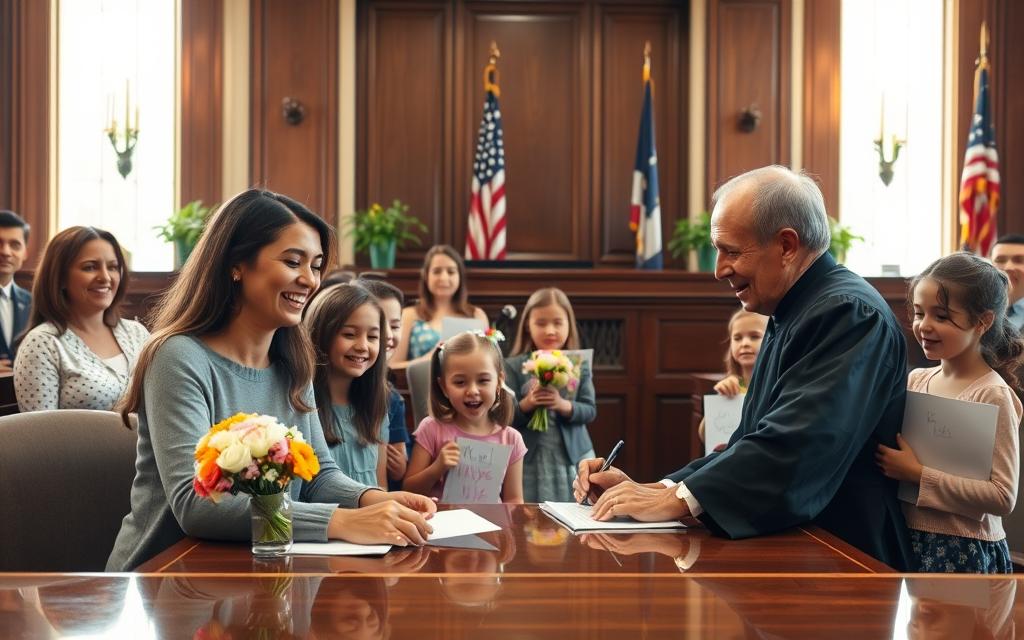
Court hearings in adoption cases are a big turning point. Families get ready for this moment with excitement and deep emotions. The finalization hearing is more than a legal step. It’s a celebration of love, commitment, and family bonds.
Planning the Perfect Celebration
Families plan the adoption finalization ceremony in their own special way. Some things to think about include:
- Inviting close family and friends to witness the legal moment
- Capturing professional photographs to commemorate the day
- Creating a personalized ceremony that reflects the family’s personality
- Preparing special mementos for the adopted child
Celebrating Family Growth
When learning how to adopt a child legally, families find that finalization is more than paperwork. It’s a profound emotional journey that changes lives forever. Some families have small gatherings, while others have big celebrations. These honor the child’s unique story and cultural background.
The adoption finalization is a legal and emotional commitment. It makes the child a permanent member of the family. Each celebration shows the love that brings families together through adoption.
Lifelong Commitment: After Adoption
Adoption is a big journey that goes beyond just papers. Adoptive parents’ legal responsibilities make a family bond that lasts forever. It needs constant love and support.
Understanding your commitment is key. It lasts your child’s whole life. The legal side of adoption helps with care and support.
Understanding Ongoing Responsibilities
Adoptive parents face special challenges and chances. They must:
- Support the child’s emotional and psychological growth
- Help the child understand their adoption story
- Keep ties to their cultural heritage
- Deal with identity questions
Resources for Adopted Children and Families
Getting help is important. Families can find support in:
- Therapists who know about adoption
- Groups for adopted kids and parents
- Workshops and classes
- Online help and communities
Open vs closed adoption legal aspects affect family life. Every adoption is different. It needs love and understanding to help the child grow.
Conclusion: The Journey of Adoption
Starting the legal adoption process is a big step towards building a family. It’s a journey filled with complex steps that change lives. Those who learn about adoption find a special way to become parents.
The time it takes to adopt a child varies a lot. It can be from 6 months to 5 years. Every year, about 135,000 kids find a forever home through adoption in the U.S.
Adoption needs patience, money, and a deep understanding of the child’s past. Most adoptive parents get emotional support. Agencies help with almost 90% of adoptions. The hard work pays off with a loving family.
If you’re thinking about adoption, know that every journey is different. There are many resources and support groups to help. They can guide you in creating a loving home for a child.
Reflecting on the Adoption Experience
Every adoption story is unique, filled with hope, love, and strength. The tough times are small compared to the joy of having a child.
Encouragement for Future Adopters
Your choice to adopt can change a child’s life. Stay informed, be patient, and trust the journey. It will bring your family together.










Leave a Reply