


Ever thought about how much your injury claim could be worth? Finding out isn’t easy. You need to understand the complex world of personal injury compensation.
Every year, many people get hurt in ways they didn’t expect. GJEL Accident Attorneys have helped clients get over $950 million. They know how important it is to get the right compensation.
Your claim’s value depends on many things. This includes medical costs, lost wages, pain, and the details of your accident. To get it right, you need to look at both economic and non-economic damages.
Key Takeaways
- Injury claim worth varies based on multiple complex factors
- Economic damages include quantifiable financial losses
- Non-economic damages address pain and suffering
- Professional legal representation can maximize your compensation
- Timely documentation is key for successful claims
- Insurance coverage affects how much you can get
Understanding Injury Claims
Injury claims are legal ways for people to get money back after they get hurt because of someone else’s mistake. These claims help people get money for accidents or things that hurt them physically or emotionally.
Lawsuit settlements can happen in many ways. This includes work accidents, car crashes, doctor mistakes, or slipping and falling. How much money someone gets depends on many important things.
What Constitutes an Injury Claim?
To get money for an injury, you need to prove three things:
- You must show you got hurt or felt bad inside
- You have to prove someone else was careless
- You need to show how the hurt has cost you money or made your life harder
Types of Injury Claims
There are different kinds of injury claims:
- Personal Injury Claims: These are for accidents that hurt you physically
- Workers’ Compensation Claims: These are for injuries at work
- Medical Malpractice Claims: These are for doctor mistakes
- Product Liability Claims: These are for injuries from bad products
Factors Influencing Claim Value
Many things can change how much money you might get:
- How bad the injury is and if it will last a long time
- All the money you spent on doctors and hospitals
- Money you lost because you couldn’t work
- How much emotional pain you felt
Knowing these details helps people understand injury claims better. It helps them get the most money they can from their case.
Factors Influencing Claim Value
When you’re looking for accident compensation, knowing what affects your claim’s value is key. Insurance companies and claim calculators look at many things to figure out how much you might get. Each part is important for figuring out your total compensation.
The main things that affect how much you can get for an injury claim fall into three big groups:
Medical Expenses: The Financial Foundation of Your Claim
Medical costs are at the heart of most injury claims. These costs include many treatments and future care:
- Emergency room visits
- Surgical procedures
- Hospital stays
- Prescription medications
- Physical therapy sessions
- Rehabilitation costs
Lost Wages: Calculating Income Disruption
If you can’t work because of an injury, lost wages are a big part of your claim. Your settlement might include:
- Money you lost while recovering
- How much you might earn less in the future
- Money for any career changes because of the injury
Pain and Suffering: Quantifying Non-Economic Damages
Pain and suffering damages are for the emotional and physical effects of an injury. Insurance companies use a multiplier method to figure this out. This method can range from 1.5 to 5, based on how bad the injury is.
| Damage Type | Typical Compensation Range |
|---|---|
| Minor Injuries | 1.5-2x Medical Expenses |
| Moderate Injuries | 3-4x Medical Expenses |
| Severe Injuries | 4-5x Medical Expenses |
Every injury claim is different. Getting help from a lawyer can help you get the most money you can. They can also help you understand the claims process better.
Evaluating Damages
Understanding damage evaluation is key in legal settlements. The claim evaluation process looks at different damages. These can greatly affect your injury lawsuit’s compensation.
Personal injury claims have three main damage types. These types help figure out the lawsuit’s value:
- Special Damages (Economic Damages)
- General Damages (Non-Economic Damages)
- Future Damages
Special Damages Explained
Special damages are quantifiable economic losses from an injury. They are easy to figure out and include:
- Medical expenses
- Lost wages
- Property damage
- Out-of-pocket costs
General Damages Explained
General damages are non-economic losses. They are harder to put a number on. They include:
- Pain and suffering
- Emotional distress
- Loss of life enjoyment
- Psychological trauma
Future Damages Considerations
A good injury lawsuit looks at long-term effects. Future damages might include ongoing medical costs and lost earning capacity. Lawyers work with medical experts to guess these costs.
The claim evaluation process needs careful documentation and strategy. This ensures fair compensation for current and future injury challenges.
The Role of Insurance Companies
Understanding how insurance companies handle claims is key. They decide how much money you get back. They use smart ways to figure out what your claim is worth.

How Insurance Adjusters Evaluate Claims
Insurance adjusters have special ways to look at injury claims. They want to pay as little as possible but seem fair. They check:
- Medical papers
- Money lost because of the injury
- How the injury might affect you later
- How long treatment will last
Strategic Approaches Used by Insurers
Insurance companies have plans to lower what they pay out. They might argue over medical costs, doubt how serious the injury is, or wait to make an offer.
| Insurer Strategy | Potential Impact on Claim |
|---|---|
| Minimizing Medical Costs | Reduce compensation by disputing treatment necessity |
| Delayed Settlement Offers | Pressure claimant to accept lower amounts |
| Requesting Extensive Documentation | Complicate claim process |
Effective Negotiation Techniques
To get a good deal, you need to negotiate well. Here’s how:
- Keep detailed records of all costs
- Know what your claim is worth
- Get a lawyer for help
- Be ready to fight low offers
Knowing how insurance companies work helps you get the money you deserve.
Legal Considerations
Handling an injury case needs smart legal thinking. The details of an insurance claim can be too much for most people alone. Knowing your legal choices is key to getting the most money.
Do I Need a Lawyer?
Personal injury cases need special legal help. A good lawyer can help a lot by:
- Figuring out how much your case is worth
- Talking to insurance companies
- Finding important evidence
- Keeping your rights safe
Importance of Legal Representation
Studies show big differences in settlements with a lawyer. The average personal injury verdict in Ohio is over $300,000. This shows how important a good lawyer is.
| Accident Type | Average Settlement |
|---|---|
| Auto Accident | $37,248 |
| Truck Accident | $103,654 |
| Motorcycle Accident | $66,108 |
Contingency Fee Agreements
Most injury lawyers work for a share of your win. This means:
- No money down
- They want you to win as much as you do
- No risk for you
- They work hard for your best outcome
Choosing the right lawyer can really help your case. It could mean a lot more money for you.
How to Calculate Your Claim Value
To figure out how much a personal injury claim is worth, you need to look at many things. Knowing how to calculate legal compensation helps victims deal with claim negotiations better.
Personal injury claims look at both economic and non-economic damages. Lawyers and insurance folks use certain ways to guess how much a claim is worth.
Claim Value Calculation Methods
There are two main ways to guess claim values:
- Multiplier Method
- Per Diem Method
Multiplier Method Breakdown
The multiplier method multiplies economic losses by a number between 1.5 and 5. This number depends on how bad the injury is, how hard it is to get better, and how it will affect you long-term.
| Injury Severity | Typical Multiplier | Example Calculation |
|---|---|---|
| Minor Injuries | 1.5 – 2 | $10,000 x 1.5 = $15,000 |
| Moderate Injuries | 2 – 3 | $25,000 x 2.5 = $62,500 |
| Severe Injuries | 3 – 5 | $50,000 x 4 = $200,000 |
Resources for Estimation
There are online tools to guess claim values. But remember, these tools give only rough ideas and can’t replace real legal advice. Important things to consider are:
- Medical costs
- Lost wages
- Damage to property
- Pain and suffering
To really know how much you might get, talking to a good lawyer is best. They can look at your case closely.
Documenting Your Damage
Getting a good injury claim worth needs careful documentation. You must gather all the evidence you can. This helps you get the most from your lawsuit and compensation.
It’s important to document your damages well. Good records can help you get a fair settlement for your injuries.
Gathering Medical Records
Medical records are key for any injury claim. You should have:
- Initial medical evaluations
- Treatment plans
- Diagnostic test results
- Prescription records
- Physician progress notes
Collecting Evidence of Lost Income
Showing you lost income is important for your accident compensation claim. You’ll need:
- Pay stubs from before the injury
- Employer verification of missed work
- Tax returns
- Documentation of future income loss
Keeping a Pain Journal
A pain journal is very helpful. It shows how you’ve been suffering. Keep track of:
| Date | Pain Level | Daily Limitations |
|---|---|---|
| May 15 | 7/10 | Unable to perform work duties |
| May 16 | 6/10 | Limited mobility, required assistance |
Good documentation can help your injury claim a lot. It can lead to a better lawsuit settlement. Getting help from a lawyer can make your documentation even stronger.
The Impact of Negligence
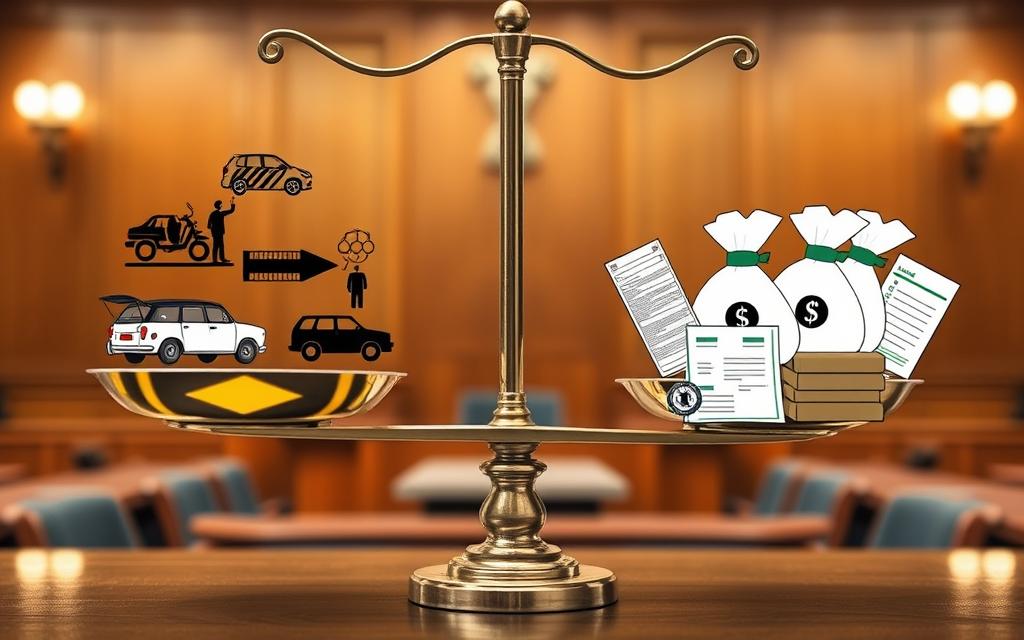
Understanding how negligence affects your legal claim amount is key in personal injury cases. Negligence can change how much money you might get. It’s important to know how fault is figured out.
Comparative Negligence Explained
Comparative negligence is a rule that shows who is to blame in personal injury cases. In places like California, how much you get can change based on your fault.
- If you’re 20% to blame for an accident, your damages might go down by 20%
- Different places have different rules for this
- Having strong evidence can help lower your fault percentage
How Fault Affects Compensation
The amount of fault can really change how much you might get. For example, in California, you can get some money even if you’re mostly to blame. But you’ll get less money.
| Fault Percentage | Compensation Impact |
|---|---|
| 0-25% Fault | Minimal reduction in claim value |
| 26-50% Fault | Moderate compensation reduction |
| 51-99% Fault | Significant compensation reduction |
It’s very important to gather all the evidence you can. This includes medical records, witness statements, and expert opinions. This can help prove your case and get you more money.
Settling Your Claim
Handling an injury lawsuit needs smart choices, like deciding on a legal settlement. Most cases settle out of court, skipping long trials.
The settlement process is all about talking and figuring out your claim’s worth. Knowing important details can help you get more money.
What to Expect During Settlement
Settlement talks involve a few key steps:
- First, you send a demand letter.
- Then, the insurance checks your claim.
- Next, you go back and forth with offers.
- Maybe you’ll try mediation too.
The Benefits of Settling
Settling has many good points:
- It ends your lawsuit fast.
- It saves you money on legal fees.
- You get money right away.
- It avoids the risk of losing at trial.
A good settlement covers different damages:
| Damage Type | Estimated Value |
|---|---|
| Medical Expenses | $10,000 |
| Lost Wages | $10,000 |
| Pain and Suffering | $40,000 |
| Total Estimated Settlement | $60,000 |
Remember, every injury claim is different. Talking to a skilled lawyer can help you understand your case better. They make sure you get the compensation you deserve.
Going to Trial
When talks fail, personal injury cases might go to trial. Most disputes settle outside court. But, some need a judge’s decision for a fair payout.

Knowing the trial process helps clients understand their case. Only 5-10% of personal injury claims go to trial. This shows trials are rare.
The Trial Litigation Journey
The trial process has key stages:
- Jury selection
- Opening statements
- Presenting evidence
- Witness testimonies
- Cross-examinations
- Closing arguments
- Jury deliberation
Potential Trial Outcomes
Trials can end in different ways. Here are some important facts:
- Plaintiffs win about 51% of personal injury lawsuits
- Median trial awards are between $15,000 and $24,000
- Only 5% of plaintiffs get awards over $1 million
Having a lawyer can greatly help. They can increase what you might get. Represented clients get an average of $77,600. Unrepresented get about $17,600.
Critical Considerations Before Trial
Choosing to go to trial is a big decision. Trials might offer more money, but they’re uncertain. Trials usually last 5-10 business days.
They can take months or years, depending on the court’s schedule. Talking to a skilled personal injury lawyer is key. They help you through the legal process and aim for the best payout.
Tips for Maximizing Your Claim
Getting the most from a personal injury claim takes smart planning and careful steps. Knowing how to get the best compensation is key. It depends on several important factors that can greatly affect your injury case worth.
Good claim negotiation needs many important parts. These can help you get the compensation you deserve.
Being Prepared and Organized
Good documentation is the base of a strong claim. Make a detailed plan to track your injury claim:
- Collect and organize all medical records
- Maintain detailed receipts for expenses
- Keep a daily pain and recovery journal
- Preserve all communication related to the injury
The Critical Role of Timeliness
Time is very important in personal injury claims. Quick action can greatly increase your compensation.
| Action | Impact on Claim |
|---|---|
| Immediate Medical Treatment | Strengthens medical evidence |
| Early Evidence Collection | Preserves critical claim details |
| Timely Legal Consultation | Protects statute of limitations |
Pro tip: Don’t talk about your case on social media. It can hurt your claim’s trustworthiness. Always talk to a professional personal injury lawyer for help.
FAQs About Injury Claim Worth
Understanding personal injury compensation can be hard. The worth of an injury claim depends on many things. This includes medical costs, lost wages, and how severe the injury is. Our claim worth calculator gives an idea of what you might get based on your case.
Having a lawyer is very important for getting the most from your claim. Studies show lawyers get much better deals than people who don’t have one. Most personal injury cases settle, and how much you get depends on the injury, treatment time, and future effects.
Common Questions About Claims
People often wonder what affects their compensation. Economic damages are for medical bills and lost wages. Non-economic damages are for pain and suffering. Insurance companies use special programs to figure out how much to pay.
It’s also important to know about fault. If you’re partly to blame, you might get less money.
Myths vs. Facts on Claim Value
There are many wrong ideas about injury claims. A big fact is that you’re not guaranteed to get money. It depends on how bad the injury is, insurance, and how much you’ve lost money.
Every case is different. Past settlements don’t mean you’ll get the same. Keeping good records, getting medical help fast, and having a lawyer can really help your claim.



Leave a Reply